

| Art./Item | Color | Size |
|---|---|---|
| 43900 | 40 | |
| 43901 | 41 | |
| 43902 | 42 | |
| 43903 | 43 | |
| 43910 | 40 | |
| 43911 | 41 | |
| 43912 | 42 | |
| 43913 | 43 | |
| 43917 | 47 |
The Mars safety shoes are characterised by the upper made of the innovative K-Knit fabric, derived from outdoot, with TPU reinforcements which is a material particularly resistant to abrasion, cuts and contact with oils.
These work shoes are equipped with a lightweight and fully recyclable aluminium toecap and a puncture-resistant insole in high flex technology that makes these safety shoes light and comfortable.
Mars work shoes are available in a low version with details in white or orange.
TECHNICAL SPECIFICATIONS
- K-Knit fabric upper
- light and flexible anti-puncture insole
- rubber reinforcement on the toe
- TPU reinforcement at major wear points
- padded tongue and welt
MATERIAL
- Upper: K-Knit and TPU
- Outsole: polyurethane
- Toe cap: aluminium
SAFETY CLASS
- S1P
- SRC
Technology



High Flex Perforation proof midsole
Anti-puncture midsole made of high-strength and highly flexible synthetic polymer fiber. It contributes to high thermal insulation of the shoe. Extremely light and comfortable, the high flex midsole guarantees total protection of the foot from the risk of wounds, cuts and punctures.
Aluminium toe cap
Light, recyclable, perfectly mouldable aluminium toe cap with the same mechanical resistance of the steel toe cap but more comfortable.
PU-PU Sole
Polyurethane gives the sole lightness and flexibility. It has shock-absorbing features that guarantee high comfort for the entire shoe. The double injection of polyurethane makes it possible to obtain dual-coloured or dual-density soles. Polyurethane is injected onto the upper by means of special moulds: these are called ‘injected soles’ or simply ‘injected’.
Performance

FO - Resistance of the sole to hydrocarbons
Work shoes equipped with soles designed to resist prolonged contact with oily substances and hydrocarbons without undergoing structural alterations. The laboratory test involves immersing the compound in Trimethylpentane, verifying that the swelling and increase in volume of the sole do not exceed 12%, thus ensuring the stability and durability of the shoe over time. This requirement is mandatory for work footwear according to the 2011 standard, while it becomes additional and optional for the 2022 standard.
A - Antistatic Shoe
Work shoes with antistatic properties that allow the controlled passage of low-voltage currents, dissipating the electrostatic charges accumulated by the operator during work activities and reducing the risk of ignition in environments with the presence of flammable or explosive substances.
P - Perforation-resistant shoe
Safety shoes equipped with a perforation-resistant insert placed in the sole. The test involves resisting penetration by a standardized nail with a diameter of 4.5 mm applied with a fixed force of 1100 N: the insert must resist without being perforated, guaranteeing maximum protection against sharp or cutting objects that may be stepped on during work activities.
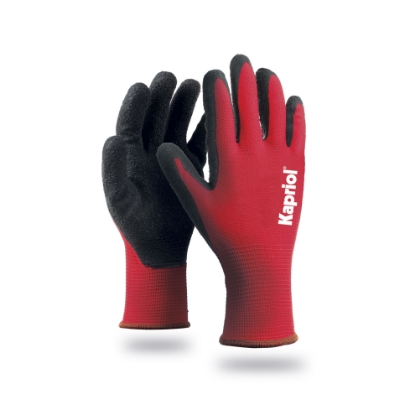
Ultra-flexible work gloves
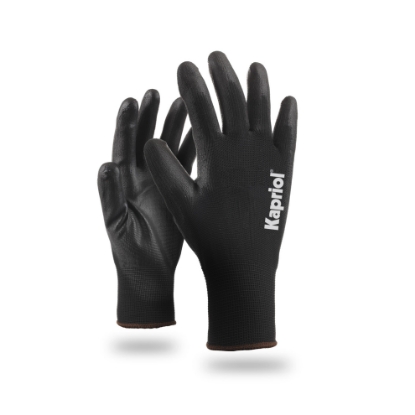
Precision work gloves
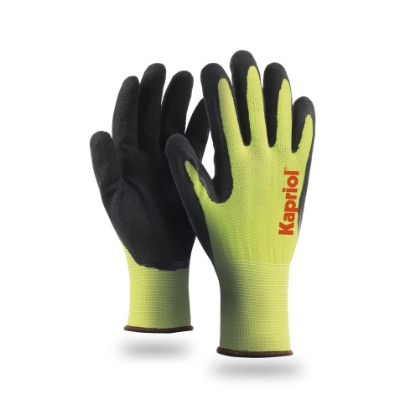
Gloves for precision work