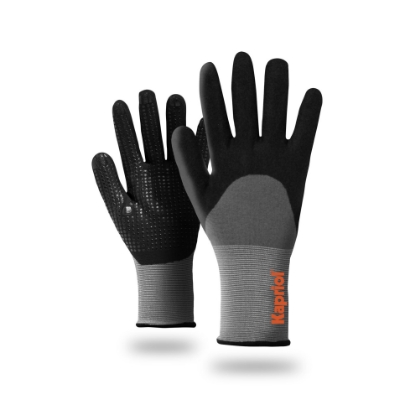


| Art./Item | Color | Pcs | Size |
|---|---|---|---|
| 28026 | 1 | 09 | |
| 28027 | 1 | 10 | |
| 89003 | 12 | 09 | |
| 89004 | 12 | 10 | |
| 89014 | 6 | 10 | |
| 89258 | 6 | 09 | |
| 27724 | 1 | 09 | |
| 27725 | 1 | 10 | |
| 27738 | 1 | 08 | |
| 27739 | 1 | 11 | |
| 27785 | 60 | 09 | |
| 27786 | 60 | 10 |
Skin and Skin White work gloves are designed to offer lightness, dexterity, and comfort in a wide range of professional and domestic applications. The smooth PU coating guarantees high tactile sensitivity and a reliable grip, ideal for operations requiring precision. The polyester lining is breathable and elastic, adapting perfectly to the hand, while the seamless design ensures maximum dexterity and comfort even during prolonged use.
These precision work gloves also feature a knit wrist that prevents dirt and debris from entering, keeping the glove stable and hygienic. Both models comply with the EN 388:2016 + A1:2018 standard and offer a reliable level of mechanical protection.
The black Skin work gloves are available in multipacks of 12 and 60 pieces, while the Skin White gloves are available in 6-piece multipacks, ideal for frequent use or for those who prefer a practical stock format.
Thanks to their versatility, Skin work gloves are ideal for electronics and the technology industry, assembly and light industry, general material handling, warehousing and logistics, the automotive industry, and agriculture and gardening. The Skin White model, more oriented towards daily use, is perfect for household chores and tasks such as drywalling or small home repairs.
TECHNICAL SPECIFICATIONS
- Lightweight PU coating
- Good tactile sensitivity and grip
- Soft, elastic, and breathable 13G polyester lining
- Seamless design
- Knit wrist to prevent entry of dirt and debris
- Ultra-flexible and thin
- Compliant with EN 388:2016 + A1:2018
MATERIAL
- Coating: Single polyurethane
- Finishing: Smooth
- Lining Polyester
APPLICATIONS
- Electronics and technology industry
- Assembly and light industry
- General material handling (black Skin model)
- Warehousing and logistics (black Skin model)
- Automotive industry (black Skin model)
- Agriculture and gardening (black Skin model)
- Household chores (Skin White model)
- Drywalling (Skin White model)
Materials


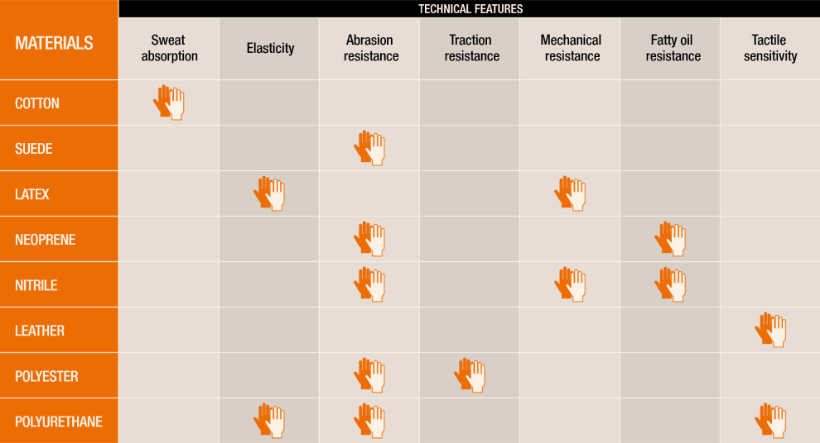
Polyester
A lightweight and durable synthetic fiber used to ensure good durability, comfort, and breathability. It offers excellent dexterity, maintains its shape over time, and is ideal for general-purpose tasks and prolonged use.
It provides high resistance to tears and abrasions while absorbing very little moisture, keeping hands dry and comfortable. Its structure allows for breathability and quick drying, making the gloves practical and easy to wash. Additionally, polyester is ideal for pairing with protective coatings to enhance grip and safety.
Polyurethane coating
Polyurethane is a lightweight and flexible synthetic material that offers protection without sacrificing sensitivity and touch. It is resistant to abrasion, tearing, and wear, while maintaining good elasticity to allow for precise movements and comfort during prolonged use. It guarantees resistance to moisture and light oils, does not absorb liquids, and is suitable for precision work.
Additionally, it provides the gloves with durability and lightness, making them practical and easy to wear.
Performance

Protection against mechanical risks
Gloves that protect against mechanical risks according to EN 388 +A1, evaluated through resistance tests for abrasion, blade cut, tear, puncture and cut according to the ISO method (TDM).
EN 388:2016 standard classifies protective gloves according to their resistance against mechanical risks. The resistance against ABRASION - CUT - TEAR - PERFORATION must appear in the pictogram relating to the standard. The revision of the previous standard (EN 388:2003) has made changes to the test procedures, especially for the CUT test, including an additional test.
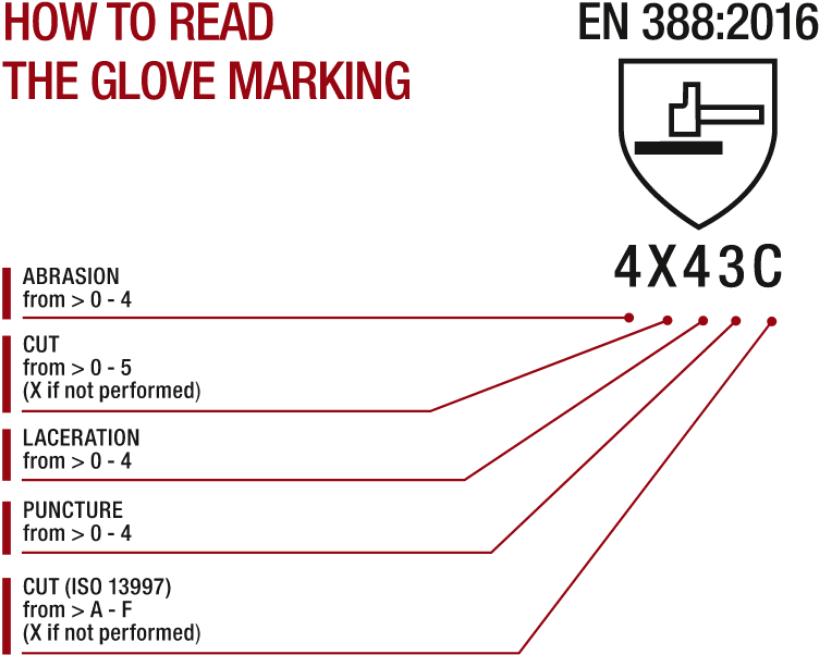
Test performed to provide an indication about the cut protection. The test is performed using a circular blade that moves on the surface of the gloves with a 5 newton pressure (Coup Test). The evaluation, from 1 to 5, is measured by calculating the number of cycles until the moment in which the blade penetrates the fabric.
For high cut resistance gloves (Coup Test 4 o 5) an additional test (EN ISO 13997) is carried out with a straight blade from which the force required to penetrate the fabric is detected. The value is expressed from A to F (F is the highest value).

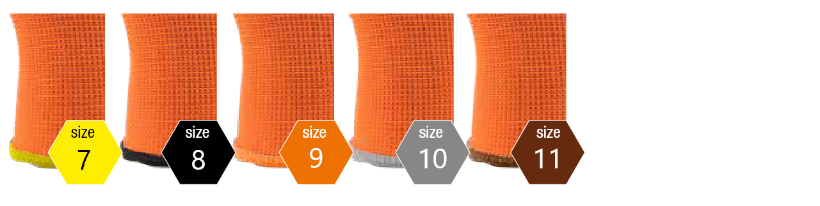
The glove cuff is available in 5 different colors for quick and easy identification of available sizes:
- Yellow size 7
- Black size 8
- Orange size 9
- Grey size 10
- Brown size 11
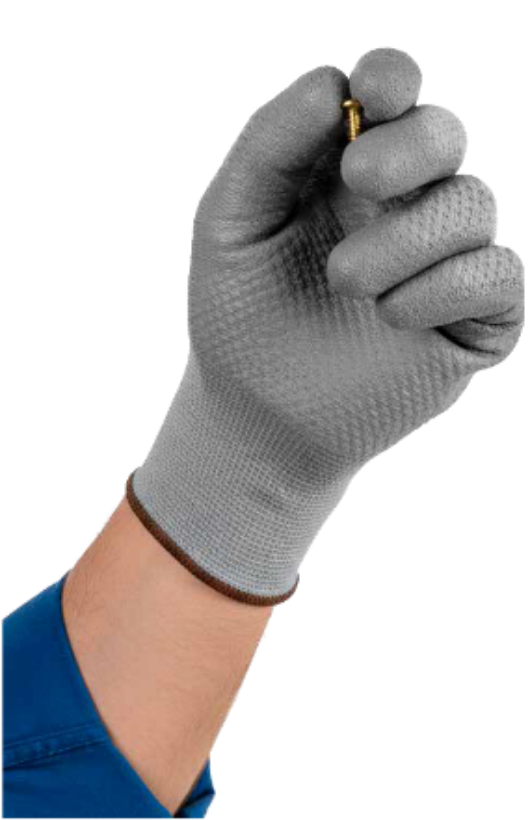
The gauge represents the fineness of the knit used to create the glove’s fabric lining. It is a fundamental parameter in determining the dexterity, comfort, and protection level of the glove. The higher the gauge, the finer and more compact the knit.
The gauge directly impacts three key aspects: dexterity, comfort, and resistance.
HIGH GAUGES: 15G > 18G
- Characterized by a very thin and lightweight knit, offering high tactile sensitivity and superior ergonomics. Ideal for precision
work, assembly, electronics, and handling small components.
MEDIUM GAUGES: 10G > 13G
- Offer an optimal balance between protection, flexibility, and durability. Suitable for logistics, maintenance, light industry,
construction, and general-purpose applications.
LOW GAUGES: 7G > 9G
- Characterized by a thicker and more robust knit, designed for heavy-duty use requiring greater mechanical resistance, such as
construction, carpentry, and heavy material handling.
The choice of gauge enables identification of the highestperforming KAPRIOL glove for each activity, optimizing comfort, safety, and dexterity.
In this catalogue, it serves as an essential indicator to guide the customer toward the most appropriate technical solution.
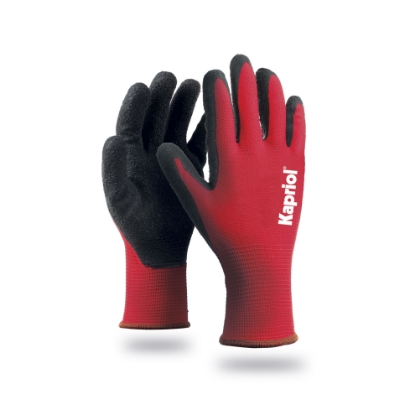
Ultra-flexible work gloves
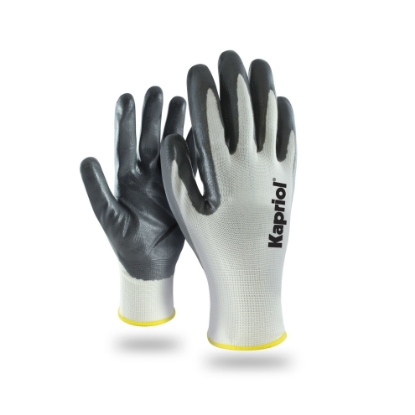
Work gloves with nitrile coating
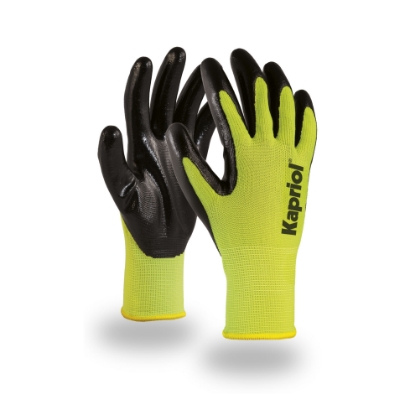
Ultra-flexible protective gloves
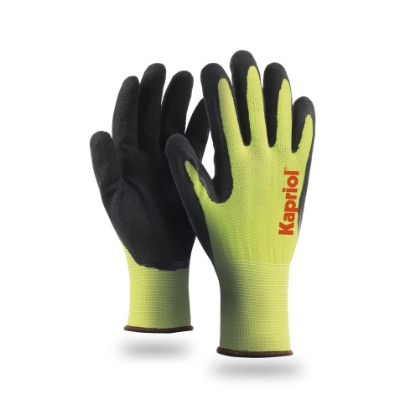
Gloves for precision work
You may also be interested in:
Related products
Gloves for precision work
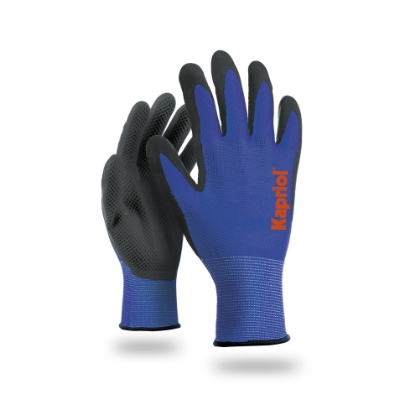
Work gloves
Ultra-flexible work gloves