



| Art./Item | Size |
|---|---|
| 27700 | 09 |
| 27701 | 10 |
| 27702 | 11 |
| 89317 | 09 - set 3 pcs |
| 89318 | 10 - set 3 pcs |
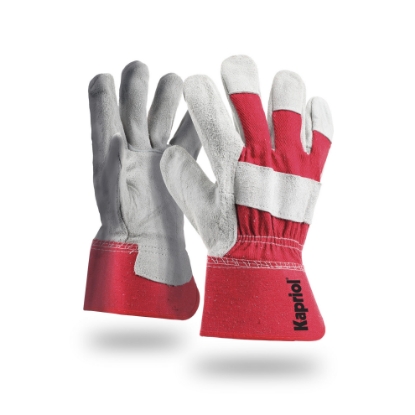
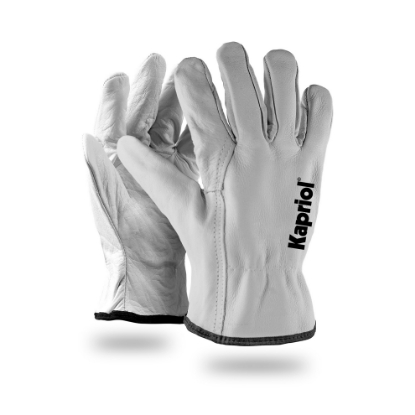
Driver Comby work gloves combine durability and comfort thanks to their hybrid construction with full-grain leather on the palm and split suede leather on the back. The full-grain leather palm ensures excellent abrasion resistance, providing protection and long-lasting performance even in the most demanding applications. The split suede back, on the other hand, offers breathability and flexibility, enhancing comfort during prolonged use without compromising safety.
These leather work gloves feature a thickness of 1–1.2 mm, ensuring high resistance and durability. The combination of robust materials and ergonomic design makes Driver Comby gloves ideal for tasks requiring high protection and reliability.
Leather work gloves are suitable for heavy-duty work, agriculture, gardening, forestry, and carpentry. They offer an optimal balance between durability, protection, and working comfort.
TECHNICAL SPECIFICATIONS
- Abrasion-resistant palm
- Flexible and breathable split suede back
- 1–1.2 mm thickness for high resistance and durability
- Excellent protection in demanding applications
- Compliant with EN 388:2016 + A1:2018
MATERIAL
- Lining: full-grain leather + split leather, thickness 1–1.2 mm
APPLICATIONS
- Heavy-duty maintenance
- Agriculture
- Gardening
- Forestry
- Carpentry
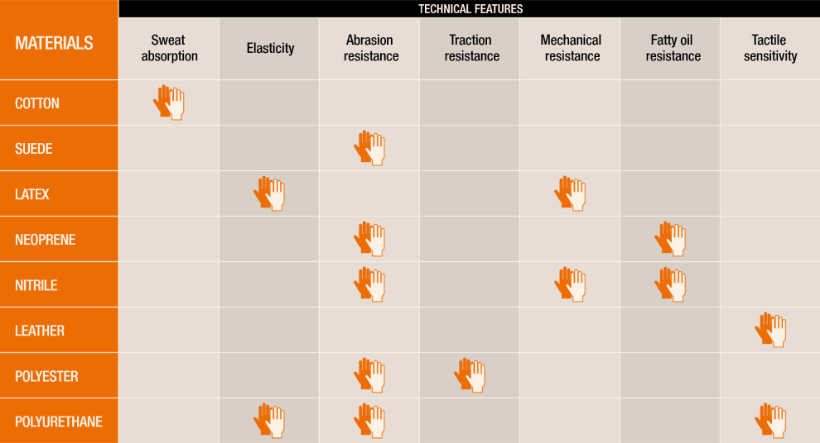
Materials

Leather
Leather is a natural material prized for its strength, durability, and comfort. In work gloves, it is selected to ensure protection against abrasions, superficial cuts, impacts, and moderate heat, while maintaining flexibility and tactile sensitivity. Leather partially absorbs sweat, promoting comfort during prolonged use, and is breathable. Different types of leather are used depending on specific needs: cowhide, goatskin, or calfskin.
Performance

Protection against mechanical risks
Gloves that protect against mechanical risks according to EN 388 +A1, evaluated through resistance tests for abrasion, blade cut, tear, puncture and cut according to the ISO method (TDM).
EN 388:2016 STANDARD
Cut resistance test
Sizes and colors
Gauge
Selection guide
EN 388:2016 standard classifies protective gloves according to their resistance against mechanical risks. The resistance against ABRASION - CUT - TEAR - PERFORATION must appear in the pictogram relating to the standard. The revision of the previous standard (EN 388:2003) has made changes to the test procedures, especially for the CUT test, including an additional test.
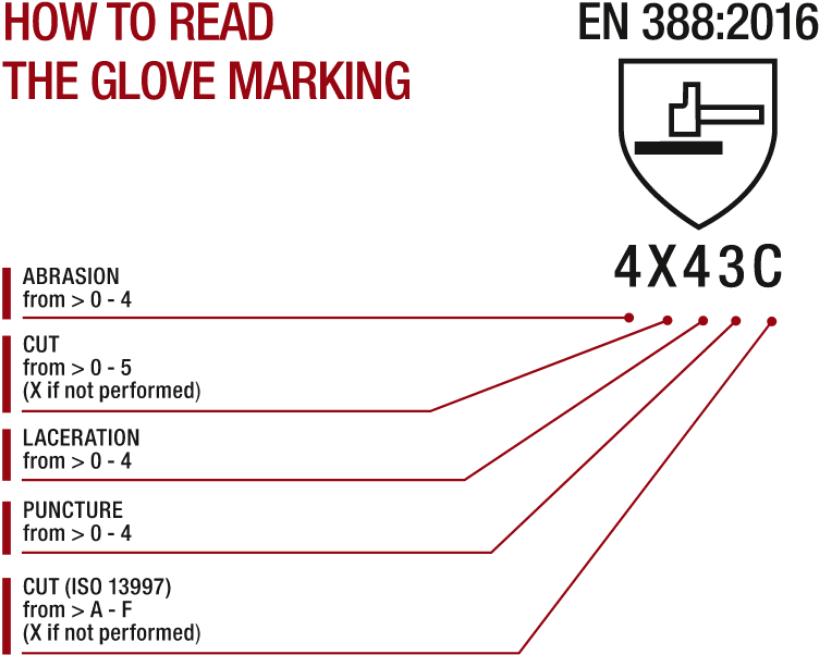
Test performed to provide an indication about the cut protection. The test is performed using a circular blade that moves on the surface of the gloves with a 5 newton pressure (Coup Test). The evaluation, from 1 to 5, is measured by calculating the number of cycles until the moment in which the blade penetrates the fabric.
For high cut resistance gloves (Coup Test 4 o 5) an additional test (EN ISO 13997) is carried out with a straight blade from which the force required to penetrate the fabric is detected. The value is expressed from A to F (F is the highest value).

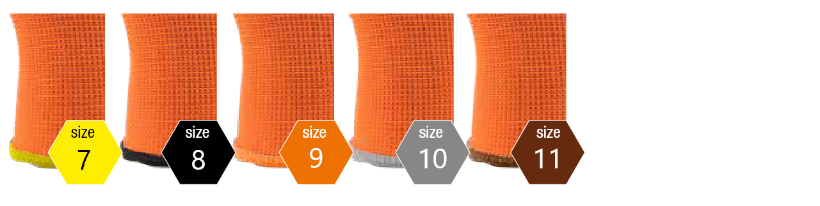
The glove cuff is available in 5 different colors for quick and easy identification of available sizes:
- Yellow size 7
- Black size 8
- Orange size 9
- Grey size 10
- Brown size 11
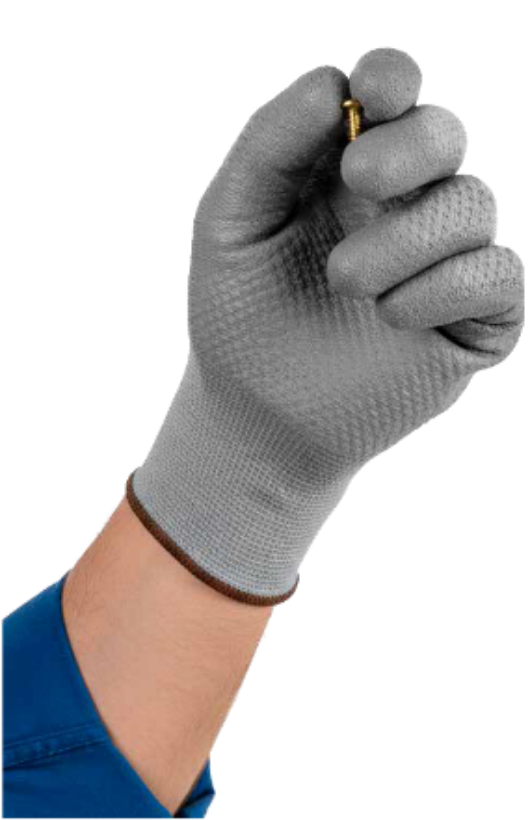
The gauge represents the fineness of the knit used to create the glove’s fabric lining. It is a fundamental parameter in determining the dexterity, comfort, and protection level of the glove. The higher the gauge, the finer and more compact the knit.
The gauge directly impacts three key aspects: dexterity, comfort, and resistance.
HIGH GAUGES: 15G > 18G
- Characterized by a very thin and lightweight knit, offering high tactile sensitivity and superior ergonomics. Ideal for precision
work, assembly, electronics, and handling small components.
MEDIUM GAUGES: 10G > 13G
- Offer an optimal balance between protection, flexibility, and durability. Suitable for logistics, maintenance, light industry,
construction, and general-purpose applications.
LOW GAUGES: 7G > 9G
- Characterized by a thicker and more robust knit, designed for heavy-duty use requiring greater mechanical resistance, such as
construction, carpentry, and heavy material handling.
The choice of gauge enables identification of the highestperforming KAPRIOL glove for each activity, optimizing comfort, safety, and dexterity.
In this catalogue, it serves as an essential indicator to guide the customer toward the most appropriate technical solution.
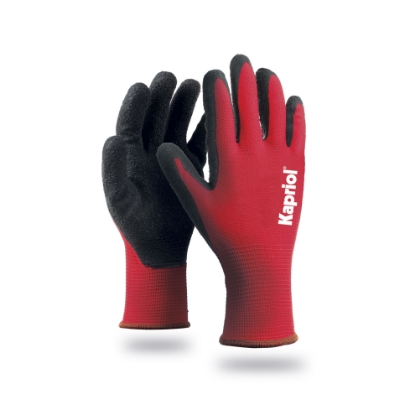
Ultra-flexible work gloves
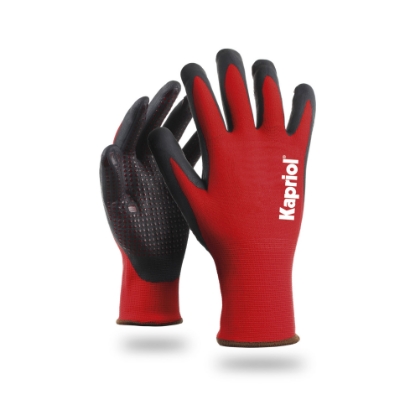
Anti-slip gloves with dotted texture
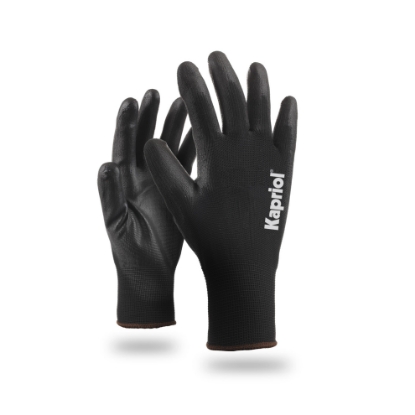
Precision work gloves
Tape measure with hook
You may also be interested in:
Related products
Leather work gloves